Why Your Plants Keep Dying
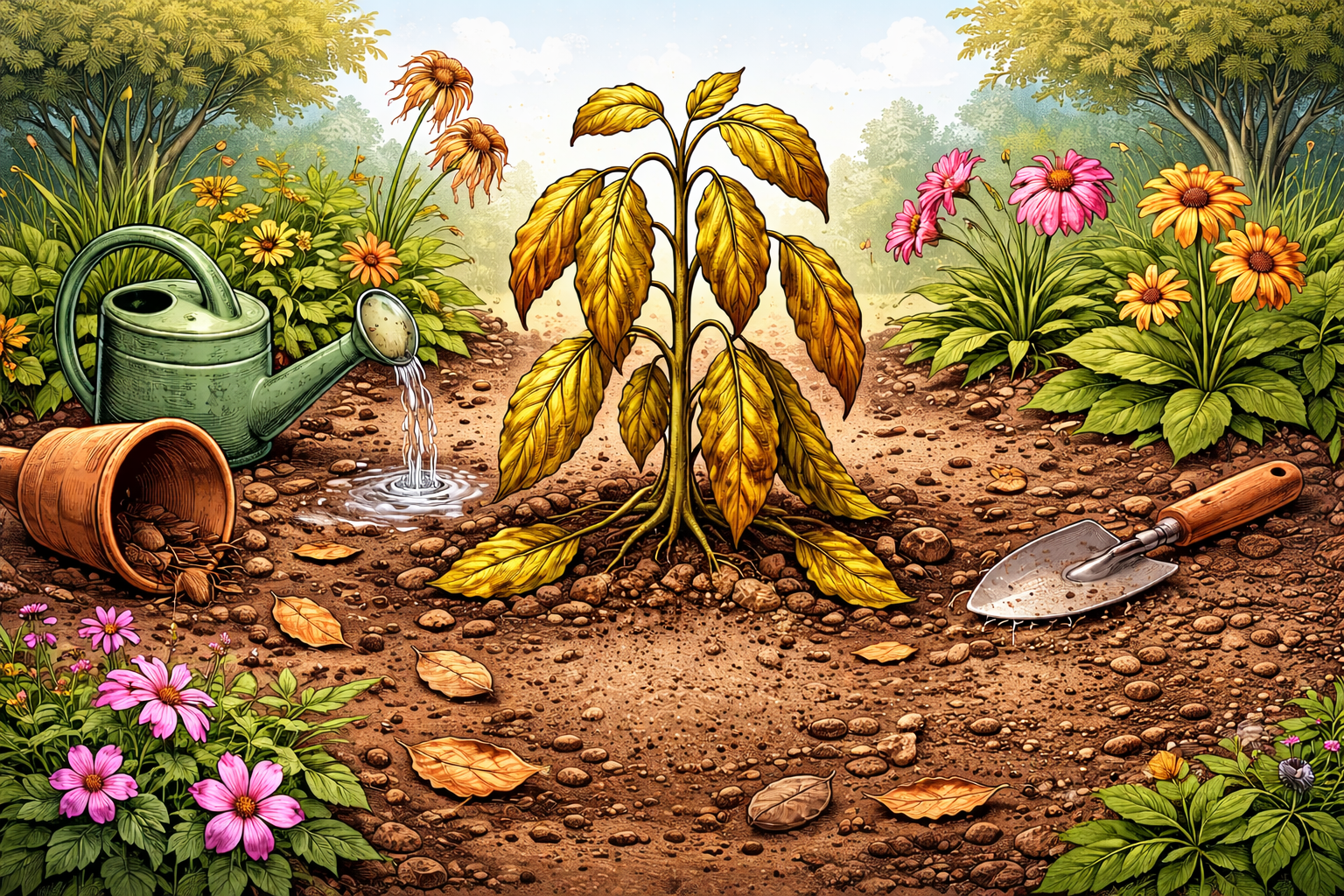
You've killed another one.
Standing there looking at brown, crispy leaves, you're wondering what you did wrong this time. Was it too much water? Not enough water? Bad plant karma? Are you just cursed when it comes to gardening?
Here's the truth: it's probably not you.
It's your soil.
And specifically, it's probably your compacted, nutrient-poor, drainage-challenged soil that you've been ignoring because nobody ever taught you that soil matters more than everything else combined.
The Uncomfortable Truth About "Black Thumb" Syndrome
Good gardeners aren't born with magic fingers.
They just understand soil.
Plants don't die because you're a bad person.
They die because their roots can't function in bad soil.
"Difficult" plants usually aren't difficult.
They're just particular about soil conditions, and most people never address the soil.
Your watering schedule isn't the problem.
Your soil's inability to hold or drain water appropriately is the problem.
The Signs Your Soil is the Killer
Sign #1: Plants Start Strong, Then Fade
You bring home a beautiful plant, it looks great for a few weeks, then slowly declines no matter what you do.
What's happening: The potting soil from the nursery is great, but once roots hit your native soil, they can't function properly.
Sign #2: Water Sits on Top or Runs Right Through
You water your plants and either:
Water puddles on the surface and takes forever to soak in
Water disappears immediately like you're watering concrete
What's happening: Clay soil that won't absorb water, or sandy soil that won't hold water. Both kill plants, just differently.
Sign #3: Some Plants Thrive, Others Die in the Same Bed
You have one area where certain plants do great, but everything else you try there fails miserably.
What's happening: You accidentally chose plants that match your soil conditions. Everything else is fighting a losing battle.
Sign #4: Digging is a Nightmare
When you try to plant something, you need a pickaxe, a prayer, and possibly heavy machinery.
What's happening: Compacted soil that roots can't penetrate. If you can't dig it easily, roots can't grow through it.
Sign #5: Roots That Look Like Crap
When you pull up dead plants, the roots are brown, mushy, stunted, or circling around in the original root ball.
What's happening: Root rot from poor drainage, or roots that couldn't expand into hostile soil.
The Soil Problems That Kill Plants
Problem #1: Compaction (The Silent Killer)
What it is: Soil particles packed so tightly that air and water can't move through.
How it happens: Foot traffic, heavy machinery, working wet soil, or just time and gravity.
How it kills plants: Roots need oxygen. Compacted soil = no oxygen = dead roots = dead plants.
The fix: Mechanical break-up (tilling, broadforking) plus organic matter to prevent re-compaction.
Problem #2: Poor Drainage (The Drowning Death)
What it is: Water sits around roots instead of draining away.
How it happens: Clay soil, low spots, improper grading, or hardpan layers.
How it kills plants: Most plants can't tolerate "wet feet." Roots rot in consistently soggy soil.
The fix: Improve soil structure, create drainage, raise planting areas, or choose water-tolerant plants.
Problem #3: Excessive Drainage (The Thirst Trap)
What it is: Water drains away so fast that plants can't absorb what they need.
How it happens: Sandy soil, sloped areas, or soil with no organic matter.
How it kills plants: Constant drought stress, even with regular watering.
The fix: Add organic matter to improve water retention, mulch heavily, or choose drought-tolerant plants.
Problem #4: Nutrient Depletion (The Slow Starvation)
What it is: Soil lacks the basic nutrients plants need to function.
How it happens: Years of construction activity, topsoil removal, or just poor soil to begin with.
How it kills plants: Plants become weak, susceptible to disease, and eventually fail.
The fix: Add compost, organic matter, and appropriate fertilizers.
Problem #5: Wrong pH (The Chemical Warfare)
What it is: Soil too acidic or alkaline for plants to absorb nutrients.
How it happens: Natural soil conditions, or years of using inappropriate amendments.
How it kills plants: Even in nutrient-rich soil, plants can't access what they need if pH is wrong.
The fix: Test pH and amend accordingly (lime for acidic soil, sulfur for alkaline soil).
The Quick Soil Assessment
The Squeeze Test
Grab a handful of moist soil and squeeze it:
Falls apart immediately: Sandy soil, drainage issues likely
Holds together but crumbles when poked: Good soil structure
Forms a tight ball that won't break: Clay soil, compaction issues likely
The Drainage Test
Dig a hole 12 inches deep, fill with water, and time how long it takes to drain:
Under 1 hour: Too fast (sandy)
1-3 hours: Good drainage
Over 6 hours: Too slow (clay/compaction)
The Shovel Test
Try to dig a hole 18 inches deep:
Easy digging: Good soil structure
Requires serious effort: Compaction issues
Need power tools: Severe compaction or hardpan
The Root Inspection
Pull up a dead plant and look at the roots:
Brown and mushy: Drainage problems
Circling in original root ball: Compaction or hostile soil
White and healthy-looking: Something else killed it (disease, wrong plant choice, etc.)
The Soil Solutions That Actually Work
For Compacted Soil:
Break it up mechanically (tilling, broadforking, core aeration)
Add coarse organic matter (chunky compost, not fine stuff)
Prevent re-compaction (pathways, raised beds, stay off wet soil)
For Clay/Drainage Issues:
Add drainage amendments (coarse compost, perlite, expanded shale)
Create raised beds (even 4-6 inches helps)
Improve grading (move water away from plants)
For Sandy/Fast-Draining Soil:
Add water-retaining organic matter (compost, aged manure)
Mulch heavily (wood chips, shredded bark)
Water more frequently (but less deeply)
For Nutrient-Poor Soil:
Add quality compost (the universal soil improver)
Use appropriate fertilizers (based on soil test results)
Maintain organic matter (annual compost additions)
The Bottom Line
Stop blaming yourself for plant deaths.
Start investigating your soil.
Most "difficult" gardening situations become easy once you address soil problems.
Most "black thumb" gardeners become successful once they understand that soil health = plant health.
You're not a bad gardener.
You just need better soil.
Fix the soil, and everything else gets easier.
Ignore the soil, and everything else gets harder.
It's really that simple.
💛 Tired of watching plants die despite your best efforts?
📲 Let's fix your soil problems once and for all → [link]
📍 Serving frustrated gardeners in Elkhorn, Bennington, Gretna, West Omaha + surrounding areas
Because healthy soil = healthy plants = happy gardeners.