Mid-July Plant Triage
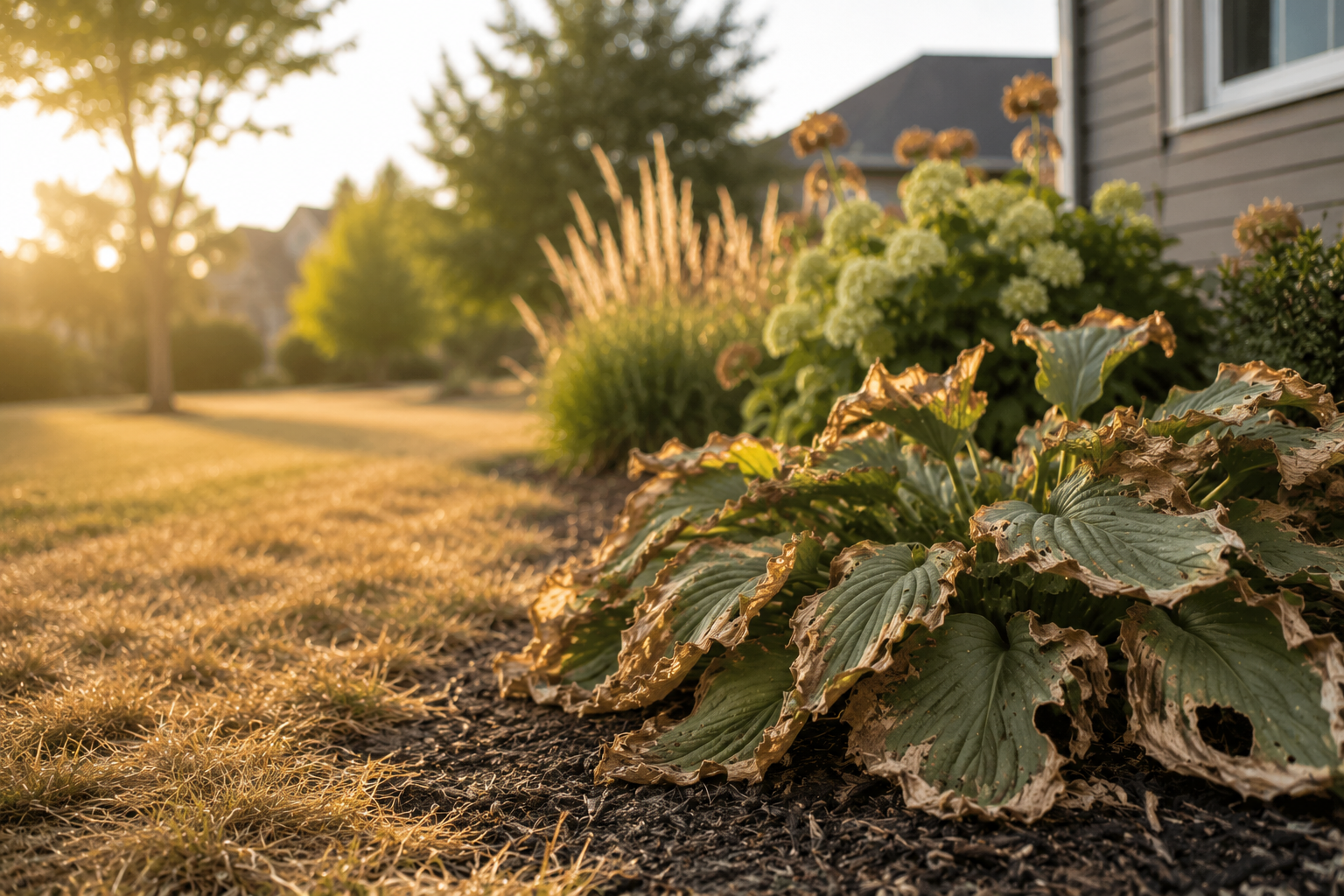
It's mid-July in Nebraska.
The grass is crunchy despite your best watering efforts. Your hostas look like they've been through a war. Even the plants that are supposed to love heat are looking stressed and crispy around the edges.
You're standing in your yard at 7 AM (because that's the only time it's bearable outside) wondering if your landscape is going to survive until September.
Here's the truth: this is the make-or-break moment for your plants. What you do in the next few weeks determines whether you have a beautiful fall landscape or a yard full of casualties.
Time for emergency triage.
The Reality of Nebraska Summer Heat
We're not just dealing with high temperatures. We're dealing with:
Blazing sun that can literally cook plants
Hot, dry winds that suck moisture out of everything
Humidity swings that stress plants constantly
Soil that either turns to concrete or dust
Nights that stay above 75 degrees (plants need cool recovery time)
Even "drought-tolerant" plants have limits. And we hit those limits regularly in July and August.
The Plant Triage System
Priority 1: Life Support (Save These First)
What to focus on:
Trees and large shrubs (expensive to replace)
Newly planted anything (less than 2 years old)
Plants showing severe stress but still green
Foundation plantings near your house
Emergency care:
Deep watering every 2-3 days in early morning
Temporary shade cloth or umbrellas for afternoon protection
Extra mulch around the root zone
Move containers to shadier spots
Priority 2: Strategic Saves (Worth the Effort)
What to focus on:
Established perennials that normally thrive
Plants that are stressed but not dying
Anything that provides significant shade or privacy
Plants with sentimental or high replacement value
Recovery care:
Consistent deep watering weekly
Remove any dead or dying portions
Apply mulch if bare soil is exposed
Consider temporary shade for afternoon protection
Priority 3: Let Nature Decide (Survival of the Fittest)
What to let go:
Annuals that have already given you their best
Plants that were struggling before the heat wave
High-maintenance plants that require constant intervention
Anything that's more brown than green
Minimal care:
Basic watering if it's convenient
Don't waste resources trying to revive clearly dying plants
Mark locations for fall replacement
The Emergency Watering Strategy
For Trees and Large Shrubs:
How much: 1-2 inches per week, applied slowly and deeply
How to do it: Soaker hose around the drip line, or sprinkler moved every 30 minutes to soak different areas
When: Early morning (5-8 AM) only. Never midday, avoid evening.
Pro tip: Water the entire root zone, not just the base of the plant. Roots extend well beyond the canopy.
For Perennials and Smaller Plants:
How much: 1 inch per week minimum, more for stressed plants
How to do it: Hand watering with a wand, focusing on root zones rather than leaves
When: Early morning before 9 AM
Pro tip: Stick your finger into the soil. If it's dry 2-3 inches down, water deeply.
For Containers:
How much: Daily, possibly twice daily for large containers in full sun
How to do it: Water until it runs out the drainage holes
When: Early morning, and again in late afternoon if they're wilting
Pro tip: Move containers to spots that get morning sun but afternoon shade.
The Immediate Relief Tactics
Create Temporary Shade
For small plants: Beach umbrellas, shade cloth, or even old bed sheets supported by stakes
For larger areas: Temporary structures with shade cloth (30-50% shade is usually enough)
For containers: Move them to east-facing locations where they get morning sun but afternoon protection
Apply Emergency Mulch
What to use: Any organic mulch—wood chips, shredded bark, even grass clippings in a pinch
How thick: 2-4 inches around stressed plants, keeping it away from plant stems
Why it helps: Keeps soil cooler, reduces evaporation, protects roots from temperature extremes
Strategic Pruning
What to remove: Dead flowers, obviously dead branches, anything that's clearly not coming back
What to leave: Don't prune healthy growth—plants need every leaf they can get for energy production
Why now: Removing dead material helps plants focus energy on surviving parts
What NOT to Do During Heat Stress
Don't Fertilize
Why: Fertilizer pushes growth, and stressed plants can't handle the extra demand
Exception: Light liquid fertilizer for container plants that are otherwise healthy
Don't Transplant or Divide
Why: Moving plants during heat stress is basically a death sentence
When to wait: Wait until September for any plant moving or dividing
Don't Prune Healthy Growth
Why: Every leaf is a solar panel producing energy for the plant
Exception: Removing spent flowers to prevent seed production is usually okay
Don't Water During the Day
Why: You're literally steaming your plants. Water evaporates before roots can absorb it.
Exception: Emergency watering for severely wilted plants, but only if you can provide immediate shade afterward
The Long-Term Recovery Plan
August Strategy:
Continue emergency watering for Priority 1 plants
Start planning fall replacement for plants that don't make it
Begin scouting nurseries for fall planting sales
September Recovery:
Gradually reduce emergency watering as temperatures cool
Assess which plants recovered and which need replacement
Begin fall planting of replacements and improvements
October Prep:
Deep watering before ground freezes
Mulch renewal for winter protection
Plan improvements for next year based on what struggled
The Silver Lining
Plants that survive Nebraska summer heat stress are tough. They've proven they can handle our extremes.
You're learning which plants work in your specific conditions. This heat wave is brutal, but it's also educational.
Fall plantings will have better survival rates. Plants established in cool weather handle the following summer much better.
The Bottom Line
Not every plant is going to make it through this heat. That's the reality of gardening in Nebraska.
Your job isn't to save everything—it's to save what matters most and what has the best chance of recovery.
Focus your energy (and water) on the plants that are worth saving and have a realistic chance of survival.
Let the others go, and use this as a learning experience for better plant choices next time.
Your landscape will recover. You'll make smarter plant choices. And next summer, you'll be better prepared.
But right now, it's triage time. Save what you can, learn what you can, and accept that some casualties are part of gardening in Nebraska.
💛 Need help prioritizing your plant rescue efforts?
📲 Let's create an emergency care plan for your landscape → [link]
📍 Serving heat-stressed homeowners in Elkhorn, Bennington, Gretna, West Omaha + surrounding areas
Because sometimes the best gardening is knowing what to save and what to let go.