Screen Your Neighbors in 3 Years or Less
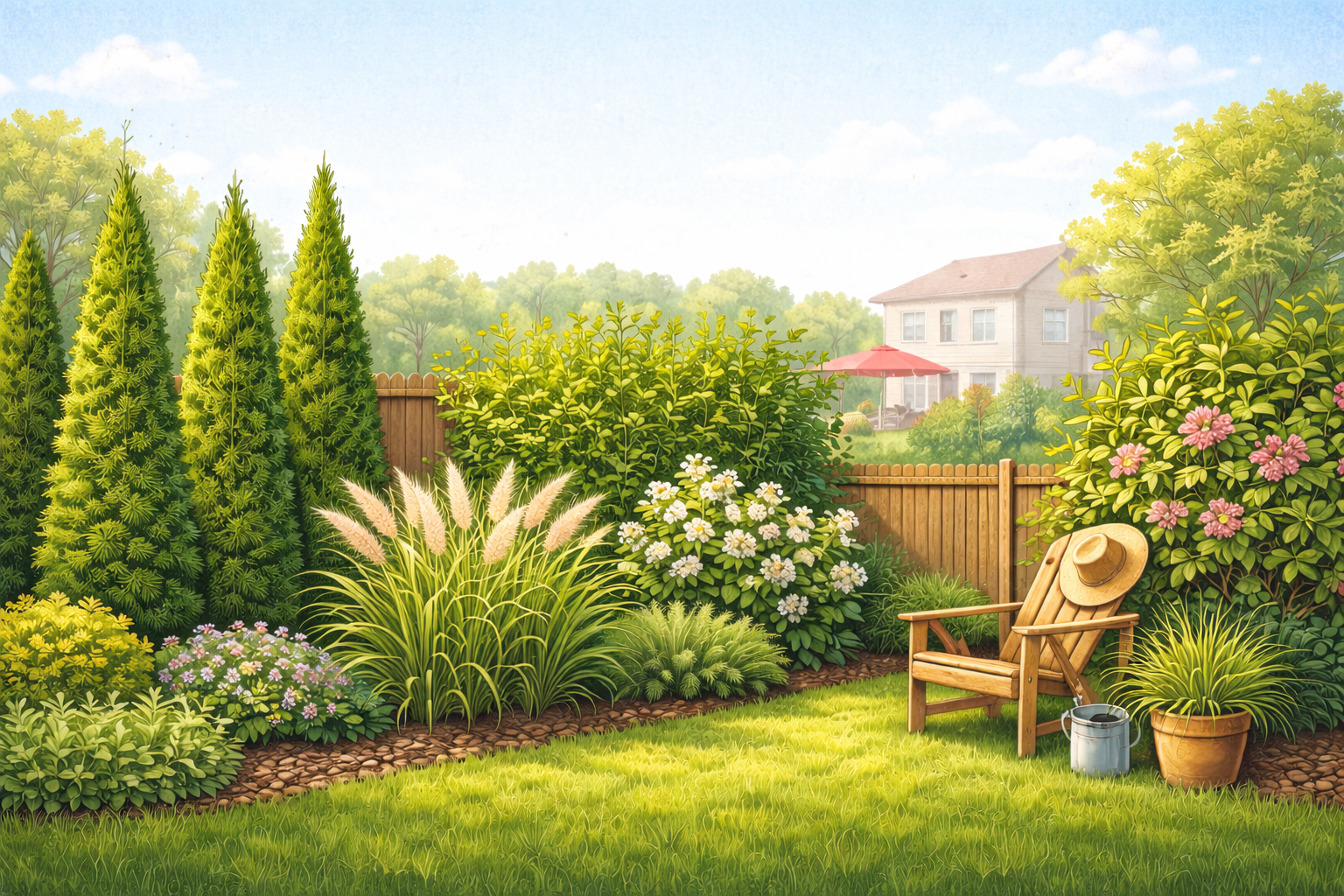
Your neighbors are lovely people.
Really, they are. But you don't need to see them every time you step outside, and they probably don't need to see you either.
Maybe it's the kitchen window that looks directly into their backyard BBQ area. Maybe it's the hot tub that seemed private until you realized the whole neighborhood has a perfect view. Maybe you just want to feel like your outdoor space is actually yours.
Here's the thing about privacy screening: most people either choose plants that take forever to fill in, or they choose fast growers that become problems later.
Let's talk about creating real privacy in 3 years or less with plants that won't drive you crazy.
The Privacy Planting Reality Check
What "Fast-Growing" Actually Means:
2-3 feet per year: Fast enough to see progress, manageable enough to control
4-6 feet per year: Very fast, but often means maintenance headaches
6+ feet per year: Run away. These plants become invasive monsters.
Height vs. Density:
You need both. A 15-foot tall plant that you can see through doesn't provide privacy.
Density takes time. Even fast-growing plants need 2-3 years to fill in properly.
Location matters. Plants closer to what you're trying to block need less height than plants closer to your viewing area.
The 3-Year Privacy Plan
Year 1: Plant the Framework
Goal: Get plants in the ground and established
What you'll see: New growth, plants settling in, maybe 50% coverage
Your patience level: This is the hardest year. Trust the process.
Year 2: See Real Progress
Goal: Significant height and width increase
What you'll see: 70-80% coverage, obvious screening effect
Your patience level: Getting excited because it's actually working
Year 3: Mission Accomplished
Goal: Full privacy screening
What you'll see: Dense, effective screening that blocks views
Your patience level: Wondering why you waited so long to do this
The Best Fast-Growing Privacy Plants for Nebraska
1. Arborvitae (Thuja occidentalis varieties)
Growth rate: 2-3 feet per year
Mature size: 15-25 feet tall, 4-6 feet wide
Why they work:
Dense, evergreen foliage (year-round privacy)
Naturally narrow (don't take over your yard)
Handle Nebraska weather well
Available in several varieties for different heights
Best varieties:
Emerald Green: 15 feet tall, classic choice
Green Giant: 20+ feet tall for serious screening
Techny: Hardy Minnesota selection, very cold tolerant
Nancy's reality check: These are the gold standard for privacy screening. More expensive upfront but worth every penny.
2. Eastern Red Cedar (Juniperus virginiana)
Growth rate: 2-4 feet per year
Mature size: 20-40 feet tall, 8-12 feet wide
Why they work:
Native to Nebraska (handles our climate perfectly)
Extremely tough and drought tolerant
Dense, evergreen screening
Wildlife friendly
Considerations:
Can get quite large (plan accordingly)
Some people are allergic to the pollen
May not be allowed in some HOAs
Nancy's reality check: If you have space and want bulletproof privacy, this is your plant.
3. Hybrid Willows
Growth rate: 4-6 feet per year
Mature size: 25-35 feet tall, 15-20 feet wide
Why they work:
Extremely fast establishment
Dense summer foliage
Good for large areas needing quick screening
Considerations:
Lose leaves in winter (no winter privacy)
Need regular water to maintain growth rate
Can be short-lived (15-20 years)
Nancy's reality check: Great for temporary screening while slower plants establish, but not a long-term solution.
4. Privet Hedges (Ligustrum varieties)
Growth rate: 2-3 feet per year
Mature size: 8-15 feet tall, 4-8 feet wide
Why they work:
Dense, formal appearance
Can be pruned to exact height desired
Tolerates various soil conditions
Semi-evergreen (keeps some leaves in mild winters)
Considerations:
Requires annual pruning to look good
Can spread by underground runners
Not fully evergreen in harsh winters
Nancy's reality check: High maintenance but gives you exact control over height and shape.
5. Mixed Native Screening
Growth rate: Varies, 2-4 feet per year
Mature size: 15-25 feet tall, varies by species
Why it works:
Combines multiple species for resilience
Provides habitat for wildlife
More natural, less formal appearance
Adapted to local conditions
Good combinations:
Eastern Red Cedar + Serviceberry + Elderberry
Ninebark + American Hazelnut + Red-osier Dogwood
Oak species + Redbud + Spicebush
Nancy's reality check: Takes more planning but creates beautiful, functional ecosystems.
Strategic Planting for Maximum Impact
The Layered Approach:
Back row: Tallest plants (15-25 feet) for overhead screening
Middle row: Medium plants (8-15 feet) for eye-level privacy
Front row: Lower plants (3-8 feet) for complete coverage and visual interest
Spacing for Success:
For solid screening: Plant evergreens 4-6 feet apart (closer than mature spread)
For natural look: Plant 6-8 feet apart and let them grow together
For mixed plantings: Stagger different species in triangular patterns
The Quick-Start Strategy:
Buy larger plants if budget allows. A 6-foot plant gives you a 2-year head start over a 3-foot plant.
Plant in fall for best establishment. September/October planting means strong root development before summer stress.
Improve soil conditions. Good soil = faster growth. Add compost and ensure proper drainage.
What NOT to Plant (Learn from Others' Mistakes)
Avoid These "Fast-Growing" Disasters:
Russian Olive: Invasive, thorny, illegal to plant in many areas
Tree of Heaven: Extremely invasive, impossible to remove
Norway Maple: Outcompetes native trees, creates dense shade
Autumn Olive: Invasive, spreads rapidly, displaces native plants
Bradford Pear: Weak wood, splits apart, invasive
Red Flags for Privacy Plants:
Grows more than 6 feet per year: Usually means problems
Spreads by runners: Will take over your yard
"Maintenance-free": Nothing that grows fast is truly maintenance-free
Not recommended for your zone: Will die in harsh Nebraska winters
The Maintenance Reality
Year 1-2: High Maintenance
Water regularly: New plants need consistent moisture
Mulch heavily: Protects roots and retains moisture
Monitor for problems: Catch issues early when they're fixable
Year 3+: Moderate Maintenance
Annual pruning: Shape and control size
Periodic watering: During extreme drought
Fertilize occasionally: Every 2-3 years for optimal growth
The Cost-Benefit Analysis
DIY Planting Costs:
Arborvitae: $50-150 per plant (depending on size)
Native trees: $30-80 per plant
Soil improvements: $200-500 for typical screening project
Total for 100 feet of screening: $1,500-4,000
Professional Installation:
Add 50-100% for labor and design
But you get: Proper spacing, soil prep, plant selection, establishment care
Compare to Fencing:
Privacy fence: $15-30 per linear foot installed
Screening plants: $15-40 per linear foot, but they improve over time
The Bottom Line
You don't have to live with no privacy forever.
You don't have to wait 10 years for plants to fill in.
You just need the right plants, planted in the right way, with realistic expectations.
Three years from now, you can have the private outdoor space you've been dreaming about.
The question is: when do you want to start the clock?
💛 Ready to create your own private outdoor oasis?
📲 Let's design a privacy screening plan that works for your space and timeline → [link]
📍 Serving privacy-seeking homeowners in Elkhorn, Bennington, Gretna, West Omaha + surrounding areas
Because everyone deserves to feel at home in their own backyard.