The Clay Soil Survival Guide
Let me guess.
You tried to dig a hole in your yard and ended up with a pickaxe, a prayer, and a serious case of regret.
Or maybe you planted something beautiful, watered it faithfully, and watched it slowly drown in clay that holds water like a bathtub.
Or perhaps you've been told you need to "amend your soil" but every solution involves hauling in dump trucks of expensive stuff and basically rebuilding your entire yard from scratch.
Welcome to Nebraska clay soil. It's a special kind of hell, but it doesn't have to be a permanent one.
Let's Talk About What We're Dealing With
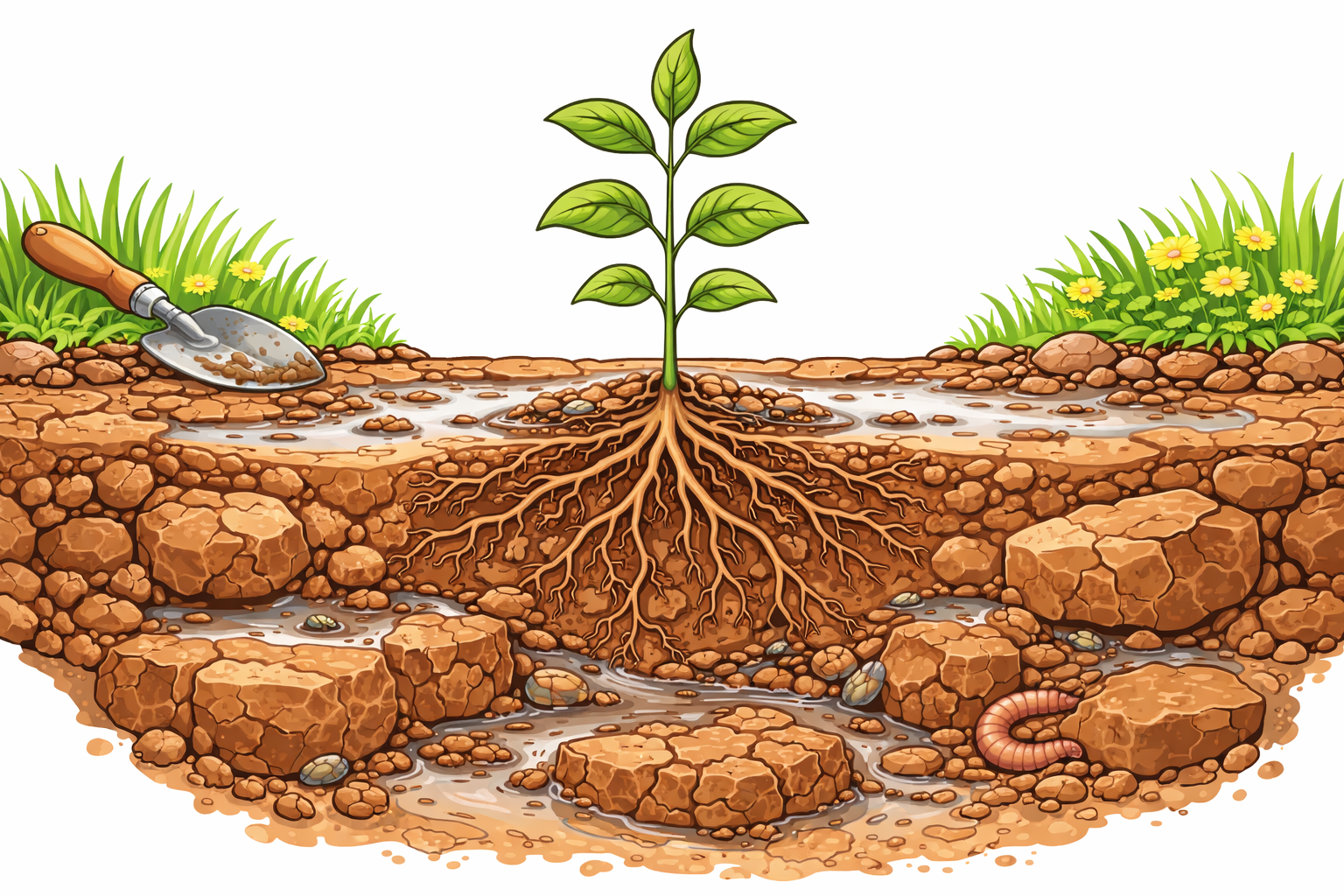
Nebraska clay isn't just "heavy soil." It's dense, sticky, water-holding, root-blocking, shovel-breaking clay that was deposited here by glaciers who clearly had a sense of humor.
When it's wet: It's like concrete. You can't dig it, you can't plant in it, and walking on it compacts it even more.
When it's dry: It's like concrete, but with cracks. Plants can't get their roots through it, water runs off instead of soaking in.
The good news: Clay soil is actually nutrient-rich. It just needs help with drainage and structure.
The bad news: Most "solutions" people try either don't work or cost more than their mortgage payment.
The 3 Amendments That Actually Work
1. Coarse Compost (The MVP)
What it is: Well-decomposed organic matter with visible chunks of bark, leaves, and other organic materials. NOT the fine, powder-like stuff.
Why it works:
Breaks up clay particles and creates air spaces
Improves drainage while retaining moisture
Adds beneficial microorganisms
Doesn't break the bank
How to use it: Mix 2-3 inches into existing soil (don't replace the soil, amend it). Work it in when soil is slightly moist, not wet or bone dry.
Where to get it: Local suppliers usually have bulk compost. Get the chunky stuff, not the fine screened version.
Nancy's reality check: This is your foundation amendment. Everything else builds on this.
2. Perlite (The Drainage Hero)
What it is: Those white, lightweight pellets that look like Styrofoam but are actually volcanic glass.
Why it works:
Creates permanent air pockets in clay
Improves drainage without washing away
Lightweight and easy to work with
Lasts for years
How to use it: Mix 1-2 inches with compost for problem areas. Focus on planting holes and bed preparation.
Where to get it: Garden centers sell it in bags. Buy the coarse grade, not the fine stuff used for seed starting.
Nancy's reality check: This is expensive in bags but worth it for small areas or specific planting holes.
3. Expanded Shale (The Long-Term Solution)
What it is: Heat-processed clay pellets that create permanent structure in soil.
Why it works:
Doesn't decompose like organic matter
Creates lasting drainage improvement
Helps prevent re-compaction
Local product (made in Nebraska!)
How to use it: Mix 1-2 inches into soil along with compost. Works especially well for raised beds and new plantings.
Where to get it: Landscape supply stores. Sometimes called "soil conditioner" or "PermaTill."
Nancy's reality check: More expensive upfront but lasts forever. Great for areas you never want to deal with again.
The Step-by-Step Clay Improvement Process
Step 1: Test Your Timing
Never work clay when it's wet. Wait until you can squeeze a handful and it crumbles instead of forming a mud ball.
Don't work it when it's bone dry either. You'll create concrete-like clumps that never break down.
The sweet spot: Slightly moist soil that breaks apart when you squeeze it.
Step 2: The 50/30/20 Mix
For new planting areas:
50% existing clay soil (don't throw it away—it has nutrients)
30% coarse compost
20% perlite or expanded shale
Mix thoroughly. Don't just layer—actually blend it together.
Step 3: Raised is Better
Even 4-6 inches of raised beds make a huge difference. You're working with gravity instead of fighting it.
Use landscape timbers, stone, or even just mounded soil to create slight elevation changes.
Step 4: Mulch Like Your Life Depends On It
Organic mulch breaks down and continues improving your soil.
Wood chips, shredded bark, or leaf mold all work. Keep 2-3 inches on top of amended areas.
Never let amended soil get compacted again. Stay off it when wet, use pathways, protect it like the investment it is.
What NOT to Do (AKA Expensive Mistakes)
Don't Add Sand
The clay + sand = concrete myth is real. You need specific ratios and types of sand to make this work. Most people get it wrong and make their problems worse.
Don't Replace All Your Soil
Bringing in truckloads of "topsoil" is expensive and often unnecessary. Plus, you'll have drainage issues where the new soil meets the old clay.
Don't Till Wet Clay
You'll create brick-hard clumps that take years to break down. Wait for proper moisture conditions.
Don't Expect Instant Results
Soil improvement takes time. You'll see some improvement immediately, but full results take 1-2 growing seasons.
Plants That Actually Like Clay (Once It's Improved)
Trees: Oaks, maples, hackberry, redbud
Shrubs: Spirea, ninebark, elderberry
Perennials: Daylilies, coneflowers, asters
Grasses: Most native prairie grasses
The secret: These plants evolved with clay soil. They just need the drainage improvements to thrive.
The Reality Check
Improving clay soil is work. But it's one-time work that pays dividends for years.
You don't have to do your whole yard at once. Start with high-priority areas and expand over time.
The right amendments cost money upfront but save money long-term. No more replacing dead plants or fighting drainage issues.
Perfect soil doesn't exist. The goal is "good enough for plants to thrive," not "Instagram-worthy dirt."
The Bottom Line
Nebraska clay soil is challenging, but it's not impossible.
Stop fighting it with expensive solutions that don't work.
Start working with it using amendments that actually create lasting change.
Your plants will thank you.
Your back will thank you.
Your wallet will thank you (eventually).
And you'll finally understand why some people's gardens thrive in the same clay soil that's been giving you nightmares.
💛 Ready to turn your clay soil into something plants actually want to grow in?
📲 Let's create a soil improvement plan that works → [link]
📍 Serving homeowners fighting clay in Elkhorn, Bennington, Gretna, West Omaha + surrounding areas
Because life's too short to fight with your soil forever.